A translucent wall floods a gymnasium with soft daylight that eliminates harsh glare on the court. Yet gyms also generate intense noise from bouncing balls, whistles, cheering crowds, and amplified announcements. You need an envelope that controls sound as well as it controls light for athletes and spectators.
Hard surfaces, tall ceilings, and large volumes make gymnasiums some of the loudest rooms in any building. Neighbors, classrooms, and offices nearby also expect protection from noise that escapes through exterior walls. You will learn which acoustic ratings apply and how translucent systems can support a quieter athletic space.
Can a Translucent Wall Meet Gymnasium Acoustic Requirements
Yes, a translucent wall can meet gymnasium acoustic requirements when you pair it with the right assembly. Designers evaluate Sound Transmission Class (STC) for noise passing through walls and Noise Reduction Coefficient (NRC) for absorption. Multi-wall polycarbonate panels, insulated cavities, and absorptive interior finishes work together to reach project targets.
How Acoustic Ratings Apply to Gymnasium Walls
Acoustic performance in gyms depends on two separate goals that designers often confuse during early planning. STC measures how well a wall blocks airborne sound traveling between the gym and adjacent spaces. NRC, in contrast, measures how much sound a surface absorbs instead of reflecting back into the room.
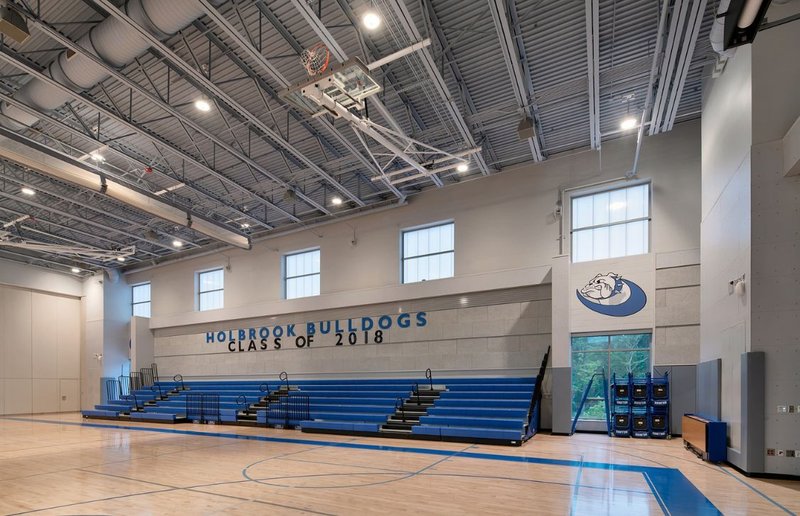
Laboratories test STC under American Society for Testing and Materials (ASTM) E90 procedures in controlled chambers. Absorption values for NRC come from ASTM C423 testing, which measures how materials soak up reflected sound. Together, these ratings help you predict both noise escape and reverberation inside the gymnasium volume.
Reverberation time often matters more than wall transmission, since echoes make coaching instructions and announcements hard to hear. Long reverberation also raises overall noise levels, which fatigues athletes, officials, and spectators during events.
Additionally, school districts often set acoustic targets for gyms that share walls with classrooms or libraries. Your acoustic consultant should define STC and reverberation goals before you select any daylighting system. Our article on designing with the soft light of a translucent wall explains the visual side of that outcome.
Design Strategies That Improve Translucent Wall Acoustics
Translucent systems start with an advantage, since multi-wall polycarbonate panels trap air within their cellular structure. Air chambers inside the panels reduce sound transmission compared with single-layer glazing of similar weight. However, lightweight panels still need thoughtful assembly design to reach the demanding targets gymnasiums require.
Double-panel assemblies with an insulated air cavity between layers improve both acoustic and thermal performance. Our article on multi-wall thermal efficiency in translucent walls explains how cavity design supports envelope performance. Consider these strategies when you design a translucent wall for a noisy gymnasium:
- Seal perimeter joints and framing connections, since small gaps let sound bypass even strong assemblies.
- Add absorptive panels on opposite walls and ceilings to shorten reverberation inside the athletic volume.
- Isolate the wall from impact sources, such as ball strikes, with padding or protective screens.
Meanwhile, polycarbonate resists ball impact far better than glass, which lowers breakage risk during games and practices. Diffuse daylight also removes glare hot spots, so players track fast balls without squinting into bright windows.
Balancing Daylight and Sound in Athletic Facilities
Athletic facility designers once chose between daylight and acoustic control when planning large gymnasium envelopes. Today, translucent systems let you combine diffuse natural light with measurable acoustic performance in one assembly. The key lies in treating light, sound, and heat as connected design goals from the start.
Diffused daylight reduces reliance on overhead fixtures, which cuts energy use during daytime practices and events. Lower lighting loads can also reduce cooling demand, since artificial light adds heat to large volumes.
Furthermore, daylit gyms feel more inviting for physical education classes, community events, and weekend tournaments. Our guide to optimized daylighting for K-12 schools and universities shows how education facilities benefit. Acoustic comfort completes that experience, since students hear instructors clearly without shouting over echoes.
Finally, mock-ups and acoustic modeling help you confirm performance before construction begins on site. A translucent wall assembly with verified test data gives owners confidence in both acoustic and daylighting outcomes. Request test reports from manufacturers early so your consultant can model the complete wall assembly.
Build a Brighter, Quieter Gym With a Translucent Wall
A translucent wall lets you fill gymnasiums with glare-free daylight while still addressing demanding acoustic goals. You reach those goals when STC targets, reverberation control, and assembly details guide early design decisions. EXTECH multi-wall polycarbonate systems combine diffuse light, impact resistance, and thermal performance in prefabricated assemblies.
Our team works with architects and acoustic consultants to select panel configurations that fit each project. You gain technical data, detailing support, and installation guidance throughout the entire design process. Reach out to our specialists to design a daylit gymnasium that sounds as good as it looks.