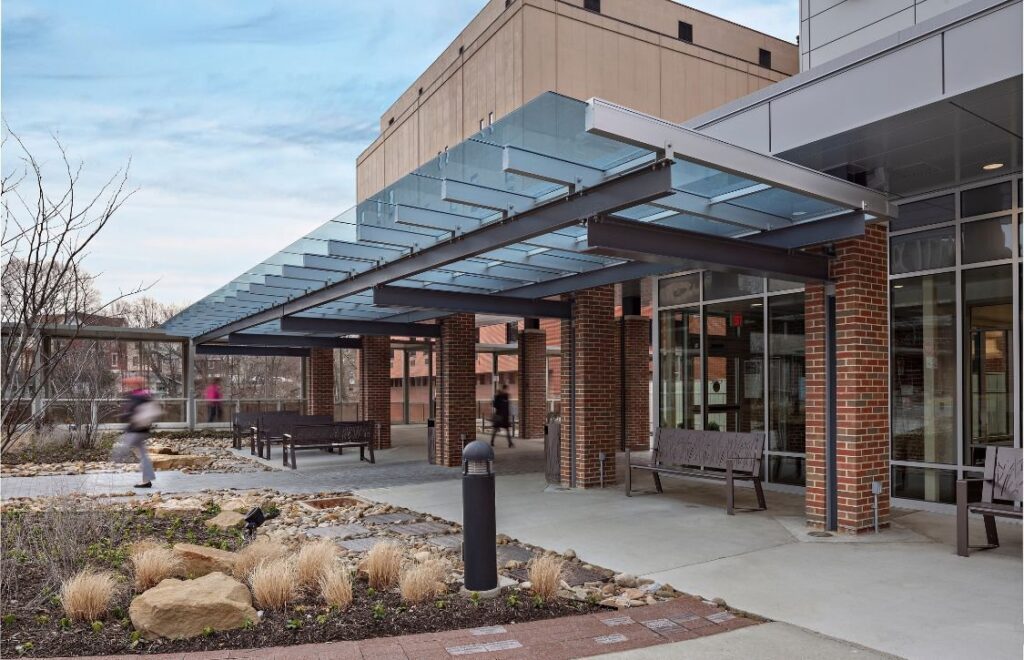
A glass canopy in a snow-prone region must carry far more than its own weight each winter. Drifting snow, ice buildup, and sliding loads from adjacent roofs all place added stress on the assembly. You need clear structural criteria before you finalize any overhead glazing design for a cold climate project.
Architects often inherit canopy details from warmer regions without adjusting them for heavier seasonal loads. Unfortunately, that shortcut can lead to glass breakage, frame deflection, and costly repairs after the first storm. Learn which load standards, glass types, and testing methods keep your entrance canopy safe year round.
How Snow Loads Shape Glass Canopy Structural Criteria
Snow load design starts with the ground snow value that local code assigns to your project site. From there, the ASCE 7 load standard converts that ground value into a design load for sloped surfaces. Canopies sit low on a building, so they often catch drifts and snow sliding from higher roofs.
Drift loads can far exceed the balanced load, especially where a canopy meets a taller wall. Sliding snow adds impact and weight when a steep upper roof sheds its accumulation onto the glazing below. As a result, your glass canopy design must account for the worst combined case rather than the average.
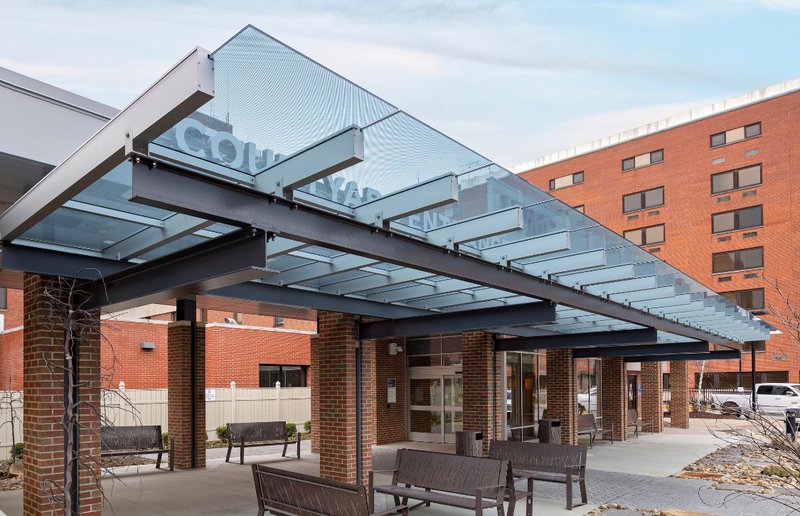
Deflection limits matter just as much as strength when glass panels rest on slender steel or aluminum frames. Excessive frame movement can crack edges, stress seals, and open paths for meltwater to reach the entrance.
Additionally, ice dams form where heat escapes from the building and refreezes along canopy gutters. You should detail drainage paths that keep meltwater moving instead of pooling on cold glass surfaces. Our guide to glass canopy technical detailing covers additional connection and drainage considerations for demanding designs.
Selecting Glass Types for Heavy Snow Performance
Glass selection determines how your canopy behaves under load and after an unexpected breakage event. The International Building Code (IBC) treats overhead glazing as sloped glazing with specific safety requirements. In most cases, code calls for laminated glass or a protective screen beneath the panels to shield people below.
Laminated glass holds fragments together with a polymer interlayer, even when both lites crack under stress. Heat-strengthened laminated glass often performs better than fully tempered laminated glass for post-breakage stability overhead. Meanwhile, compare these properties when you specify a glass canopy for a high-snowfall site:
- Interlayer type, since stiffer ionoplast layers limit sag after breakage better than standard polyvinyl butyral (PVB).
- Glass thickness, which you size against the combined snow load using American Society for Testing and Materials (ASTM) E1300 charts.
- Edge support conditions, because four-sided support handles snow loads far better than two-sided point fixings.
- Surface coatings or frits, which can raise panel temperature and change how snow melts and slides off.
Also, review our comparison of glass canopy versus polycarbonate entrance systems if weight limits push you toward lighter glazing. Polycarbonate offers high impact resistance and lower weight, although it trades away some clarity compared with glass.
Testing Standards That Validate Assemblies
Calculations alone rarely satisfy building officials when overhead glazing sits above a busy public entrance. Instead, many jurisdictions expect test data or engineered calculations stamped by a licensed structural engineer. You strengthen your submittal package when the glass canopy manufacturer supplies documented load testing for the full assembly.
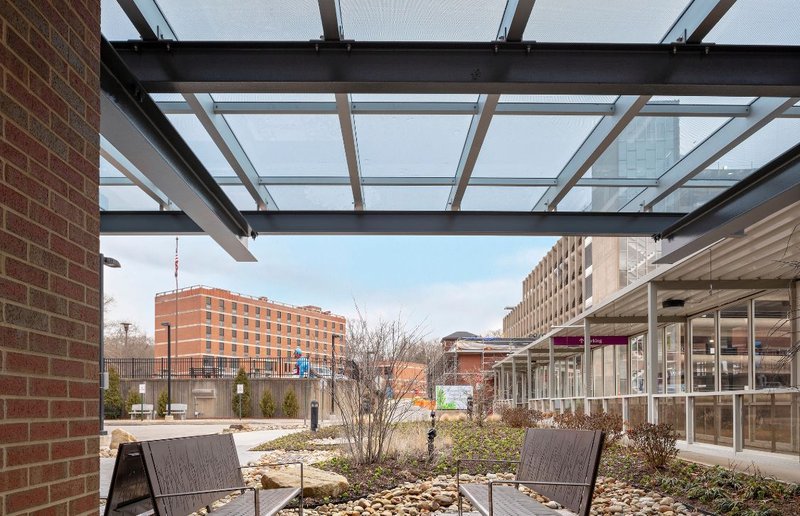
Uniform load testing under ASTM E330 shows how framing and glass respond to sustained pressure over time. Post-breakage testing then confirms that cracked laminated panels stay in their frames until crews replace them.
Furthermore, prefabricated assemblies give you tested components rather than field-built connections with unknown capacity. Factory fabrication keeps tolerances tight, which protects glass edges from point loads that trigger breakage. Learn more about the benefits of prefabricated systems for faster installation and verified structural performance.
Finally, plan an inspection schedule that checks sealants, fasteners, and drainage after each major winter storm. Facility teams should remove heavy snow with soft tools rather than metal shovels that scratch or chip glass. Routine maintenance protects both the glazing and the people who walk beneath the canopy every day.
Design Your Next Snow-Ready Glass Canopy With Confidence
Snow-prone regions demand glass canopy designs that account for drifting, sliding, and ice loads together. You protect occupants when you pair accurate load calculations with laminated glass and tested framing assemblies. EXTECH engineers prefabricated canopy systems that meet demanding structural criteria without complicating your installation schedule.
Our team supports architects with load documentation, detailing guidance, and glazing options for cold climate projects. Early coordination helps you avoid costly redesigns once the structural engineer reviews your canopy submittal. Contact us today to discuss load ratings for your next snow-country canopy project.